English/Honors 298: Researching and Writing About Comic Books

Honors 298 is designed to introduce students to research and writing, but also critical, creative, and collaborative thinking. We will consider these issues investigating the history of comics and the graphic novel. Eddie Campbell has called the graphic novel “an emerging new literature of our times in which word, picture, and typography interact meaningfully and which is in tune with the complexity of modern life.” Our course will engage with the cultural, rhetorical, and aesthetic issues surrounding comics. What, for example, makes comics uniquely suited to produce specific types of arguments? How has the history of comics enabled certain cultural representations of minorities and excluded others, and in what ways do specific authors contest that history? Finally, we will look at how digital technology is changing how we enjoy comics and what possible futures exist for the genre. The final course project will be collaborative and ask students to design, write, and illustrate their own 5-10 page mini-comic that introduces a central argument and supports that argument with both visual and literary rhetoric.

Warning: The comics we’ll read this semester include explicit language and graphic depictions of violence and sexuality. If you feel this would offend you, please find another section of HNRS 298.

Texts
Note: All comics, with the exception of Nat Turner, are available on Comixology, for those of you who prefer to read digitally. I have included the relevant issue numbers for the collections we are reading in parentheses.

  • Jason Aaron and R.M. Guera. Scalped. Vol. 1 and 2 (#1-11)
  • Fred Van Lente. Comic Book History of Comics. (Comic Book Comics. #1- 6)
  • Nate Powell. Swallow Me Whole. (Digital)
  • Greg Rucka and JH Williams III Batwoman: Elegy. (Detective Comics. #854-860)
  • Brian Michael Bendis, Sarah Pichelli, and Chris Samnee. Ultimate Comics: Spiderman. Vol. 1 and 2 (#1-10)
  • Paul Tobin and Colleen Cover. Gingerbread Girl. (Digital)
  • Jason Shiga. Meanwhile. (Available as an application on the iPad).
  • Grant Morrison and Frank Quitely. We3. (#1-3)
  • Kyle Baker. Nat Turner. Vol. 1 and 2
  • Jeff Lemire. Sweet Tooth. Vol. 1 and 2 (#1-11)
  • Carla Speed McNeil. Finder: Voice. (Digital)
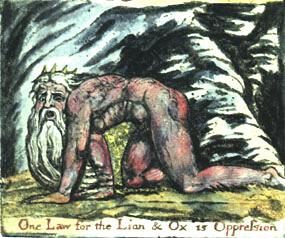
 

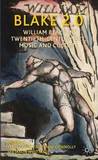
I got this great idea from Kelli Marshall, who uses Twitter in the classroom and posts the best Tweets from her classes on her blog. I’m also going to publish tweets from my current class “LCC 2400: Introduction to Media Studies,” but I wanted to give you a sense of the great work done last Spring by my Blake class. I’m also cross-posting this on Zoamorphosis. My course focused on the people who inspired Blake (positively or negatively) and people who have been inspired by Blake. Along the way, we managed to read a good chunk of Blake’s work, examine his illuminations, and think about his printing process.

I required students to tweet at least three times every class session, and at least once every other day. Here are some of the most intelligent, insightful, interesting, or otherwise moving student tweets. I’m also publishing one Tweet from me, to show you how I was inspired by the Tweets of my students, and another from a Brittain Fellow at Georgia Tech named Pete Rorabaugh, who was kind enough to engage in Twitter with my students during the semester.

Paradise Lost and The Marriage of Heaven and Hell

#wb1102 Marriage of Heaven and HELL begins on page 66, coincidence, I think not...
February 14, 2026 7:22 am via webReplyRetweetFavorite
@lightninglad11
Sy Rashid

#wb1102 Reminds me of that old cartoon with the jazz singing owl whose father says "ENOUGH IS TOO MUCH!"
February 14, 2026 5:35 am via webReplyRetweetFavorite
@Forscyvus
Charles Hancock

Continue reading »

Fall 2011 Course

 teaching  Comments Off
Apr 102011
 

Visualizing Nineteenth-Century British Poetry

The literature and arts of the nineteenth century were highly engaged in questions of vision and visuality. In this course, students will study poets and artists who contributed to the evolution of British visual culture, from the poetry of the picturesque and the sublime to the poetry of decadence and the grotesque. Along the way, we will examine how various visual artists imagined the poetry of the nineteenth century. Projects will include a visual picturesque narrative, a multimodal analysis of poems and their illustrations, and a video reimagining a single poem from the course.


On Wednesday, December 8 2010, students from my comics and graphic novels course held a comic fair for the Georgia Tech community. Participants were able to pick up two free comics created by my students. We had a HUGE turnout, around 200-300 people in the three hours we held the fair. Check out some images from the event!

Continue reading »

Dec 012010
 

Here’s the poster for the 2010 Georgia Tech Comic Fair. If you are in Atlanta, come on by and get some free comics!

My Spring 2011 class

 teaching  Comments Off
Nov 042010
 

You can find more posters for the course on my poster page.

Aug 302010
 

Here’s a great presentation of Joe Sacco’s most recent graphic novel Footnotes in Gaza. I’m teaching a great selection from The Fixer, a great piece of comics journalism about the Bosnian War, in my current Comics and Graphic Novels class.

© 2011 Roger T. Whitson, Ph.D Suffusion theme by Sayontan Sinha