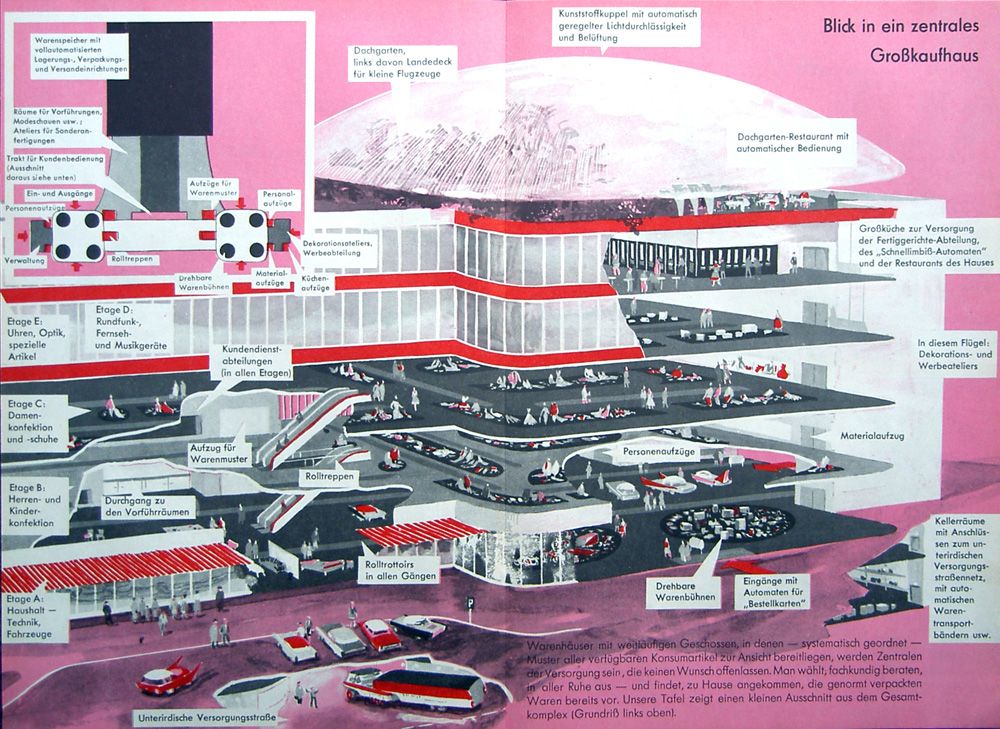
Science fiction and steampunk have proven quite popular in the past few years of MLA’s national conventions. The 2014 panel “Steampunk: Repurposing the Nineteenth Century,” had a healthy attendance despite occurring on the last day of the conference. Retrofuturism, those alternate-history futures often invoked by steampunk novels, has a broader tradition that spans cross-disciplinary interests like those in critical theory and the digital humanities. Frederic Jameson’s 1982 essay “Can We Imagine the Future” described retrofuturism as a form of nostalgia and an impoverishment of science fiction’s utopian imagination symptomatic of postmodern “urban decay and blight.” The cynicism often associated with Jameson’s critique of retrofuturism can be seen in the move of producer Ronald D. Moore from the sleek, shiny sets of the Starship Enterprise in Star Trek: The Next Generation (1988-1994) to the tarnished militaristic tubes and analogue telephones of the Galactica in Battlestar Galactica (2004-2009). In a 2008 interview, Moore describes his work on Galactica as “[t]hings we said we couldn’t do [in Star Trek].” The contrasts between the series parallel two very different historical moments: the optimism associated with the fall of Communism and the comparatively darker period experienced after September 11.
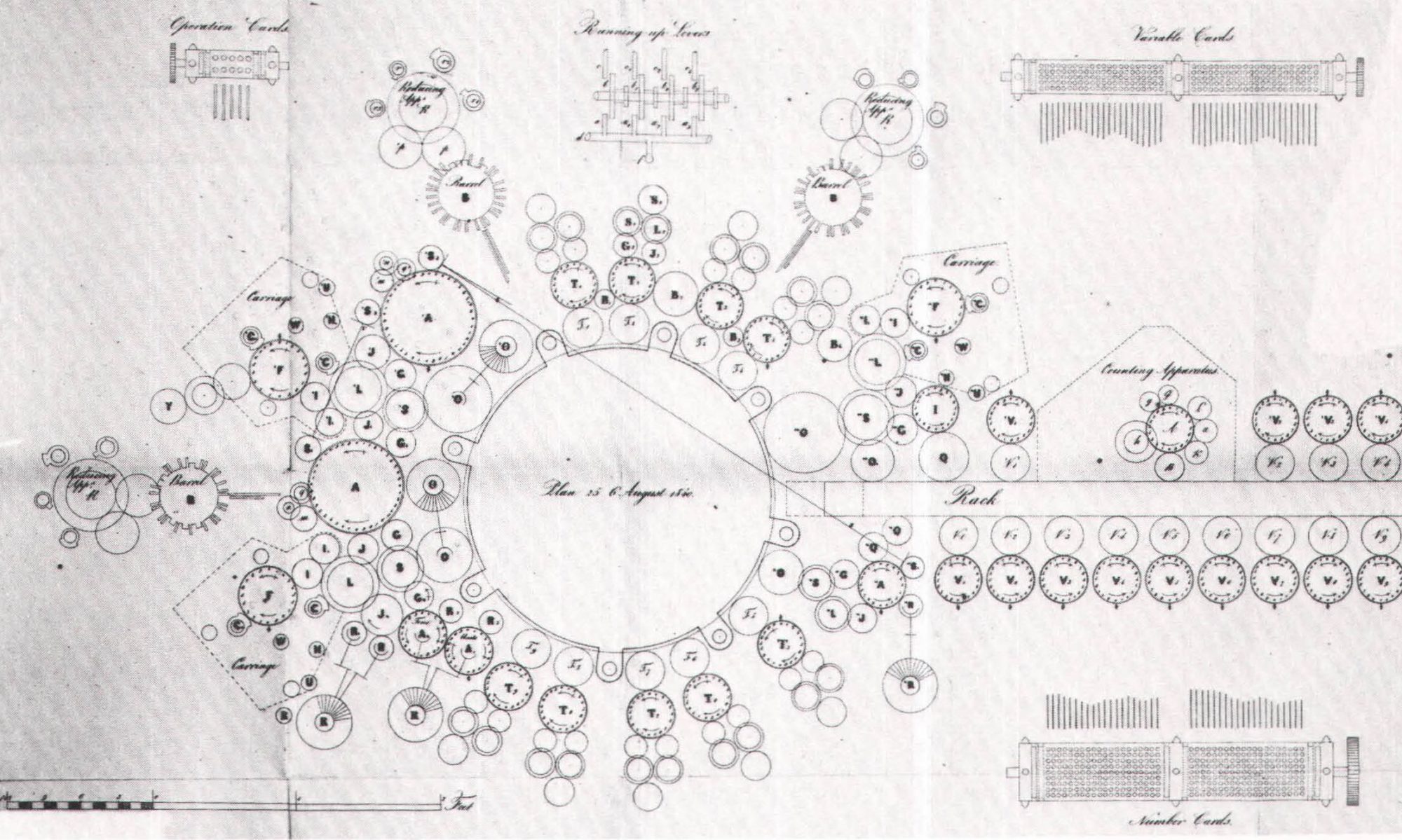
Yet, retrofuturism has applications for critical theory that depart from Jameson’s brand of historicism. As explained by Jussi Parikka, retrofuturist aesthetics inspire “the punk-influenced spirit of tinkering, bricolage, and fascination with mad science, experimental technology and the curiosity cabinets that such worlds offer” (1). Strange fantasy worlds associated with the new weird fiction of China Mieville and K.J. Bishop often incorporate and remix many different technological periods together, forming infrastructures that defy the linear temporalities assumed by some science fiction. The critical making and media archaeology theories of Parikka, Siegfried Zielinski, and Shannon Mattern describe technological infrastructures that are superimposed upon one another, forming sedimented layers of materiality that combine the present and the past. This approach to history is especially important in the practice of retrocomputing, where tinkerers and hobbyists take apart and reconstruct old or otherwise obsolete computing technologies in order to understand the layered history of internet cables, hard drives, and software.
This panel sees retrofuturism as offering alternatives to typical histories of computing that might be found in the digital humanities or media studies emphasizing linearity, innovation, or obsolescence. It values anachronism as an important tool for critical theories involving narrative futures that are necessarily implicated in the materialities and fantasies of the past. Finally, it insists upon a continuity between discursive forms of critical inquiry and the more material forms of practice associated with building or making — striving to inhabit the possibility space of the “what-if,” defined by Jonathan Lukens and Carl DiSalvo as the capability to “be creative with technology” (24).
Panel in Brief
Each of the presenters will engage with various forms of retrofuturism in the context of critical theory, aligning it variously with media archaeology, variantology, technology and book history.
Roger Whitson’s “Steampunk Recursions and Computational Retrofutures in Bioshock Infinite” begins the panel by exploring the interplay of literary and computational retrofuturism. Bioshock Infinite (2011) unfolds strange recursive structures to steampunk narratives that is symptomatic of a widening parallax gap between human-centered cultural history and what Friedrich Kittler calls “recursive history,” or the repetition of ideas and technological media across different temporal moments. I suggest that Kittler’s notion of recursive history is applicable to various aspects of Wolfgang Ernst’s concept of the time-criticality of processual recursions in computers. Narratively, Bioshock Infinite manifests these computational temporalities in the alternate dimensions that play out different recursions of the same historical themes. Players of the game find, for instance, that the protagonist and the antagonist are actually the same character from separate alternate timelines. Whitson compares this narrative structure to the programming strategies behind Elizabeth, the character who accompanies the player in the game and who’s artificial intelligence was celebrated during the lead-up to the game’s release. According to programmer Ken Levine, Elizabeth was founded upon roaming enemies from earlier Bioshock games. Yet, she was also given “general heuristics of behavior,” which allowed her to be given “things she can be interested in” entirely separate from the player character’s actions. Bioshock Infinite demonstrates how programming is impacting the narrative structure of alternate histories in steampunk, and how history itself might be growing dependent upon the recursive components of computing technology.
This materialist thread of retrofuturist research is continued in Lori Emerson’s “Practice-based Research in the Media Archaeology Lab: Past Solutions for Present Problems,” in which she describes how the Media Archaeology Lab (MAL) - a place for hands-on research and teaching using still-functioning, outdated computer hardware and software dating back to the mid-1970s - pulls together theories of media archaeology and theories about practice-based research in its pursuit of disrupting two tendencies that seem to support and feed each other: a) the tendency to create neat teleologies of technological progress that span from past to present and b) the tendency to represent such teleologies through exhibits that display only the outsides and surfaces of these artifacts rather than their unique, material, operational sides. Emerson will discuss the ways in which systems such as the Vectrex gaming console (produced for only one year from 1983 to 1984) actually clearly shows us that “new” does not necessarily mean “better” in computing, as this machine’s vector-based graphics and light-pen make it possible to create animations easier and more quickly than any contemporary software. With the emphasis on research creation as the primary means for both making discoveries in the pursuit of new forms of knowledge and creating a theoretical framework to help contextualize these discoveries, the MAL provides a flexible structure that stimulates the creation of new and hybridized forms of art, literature, performance, scholarship, theory, design, curation, exhibition, and publication using only outdated, outmoded hardware and software.
Finally, Matt Kirschenbaum provides a fascinating case-study of retrofuturist experimentation in “Hands On: Restoring a Scene of Early Word Processing through Tape and Type.” Kirschenbaum presents a piece of writing machinery known as the IBM MT/ST (Magnetic Tape/Selectric Typewriter), as well as the concurrent recovery of a typescript of the first novel known to have been written with it, Len Deighton’s Bomber (1970). Although it was the first consumer product explicitly marketed as a “word processor,” the MT/ST bears little resemblance to such devices as we know them today. The unit, which cost $10,000 in 1964, weighed nearly 200 pounds and consisted of the typewriter attached to a magnetic tape storage unit. In 2012, the author purchased a vintage MT/ST on eBay (for considerably less than $10,000) and is currently working to restore it to full functionality; shortly thereafter, the author also helped recover one of two known surviving typescripts for Bomber, very likely “the first book ever recorded on magnetic tape,” as Deighton puts it in the afterword (and thus the first novel ever written on a word processor). Yet Deighton himself did not operate the machine. This work instead fell to his secretary, Ms. Ellenor Handley, who revised drafts and also set up a system of marker codes that allowed her to cross-reference different portions of the manuscript to ensure consistency. Situated as the nexus of magnetic recording, typewriting, word processing, and data entry—all activities overtly gendered—Bomber, which is itself a harbinger of what we would today call a techno-thriller, is thus an important artifact for the media archaeologist of the early digital literary age.
Works Cited
Frederic Jameson. “Progress or Utopia: Can We Imagine the Future?” Science Fiction Studies. 9.2 (1982): 147-58. Print.
Jonathan Lukens and Carl DiSalvo. “Speculative Design and Technological Fluency. IJFL 3 (2012): 23-40.
Jussi Parikka. What Is Media Archaeology? Cambridge, UK: Polity, 2012. Print.
Anthony Pascale. “Fighting the Trek Cliches: An Interview with Ronald D. Moore.” TrekMovie.com 21 June 2008. Web log post. 31 March 2014.
Panelist Bios
Roger Whitson is Assistant Professor of English at Washington State University. He is author (with Jason Whittaker) of William Blake and the Digital Humanities: Collaboration, Participation, and Social Media (Routledge 2012). He examines the implications of critically engaging in nineteenth-century literary scholarship in the wake of the digital humanities and has published numerous articles on DH, digital pedagogy, Blake, and Steampunk. He is currently working on a special issue of Romantic Circles devoted to “Blake and Pedagogy,” and a monograph called Steampunk and Alternate History: The Nineteenth Century in an Age of Digital Humanities. You can follow him on twitter (@rogerwhitson) or get more information about his scholarship on his website (rogerwhitson.net).
Lori Emerson is Assistant Professor in the Department of English at the University of Colorado at Boulder. She writes on digital literature, experimental American and Canadian writing from the 20th and 21stcentury, history of computing, and media theory. You can find some of her published essays here. In addition to directing the Media Archaeology Lab she has two forthcoming book projects currently in press. The first is a monograph, Reading Writing Interfaces: From the Digital to the Bookbound (forthcoming from University of Minnesota Press, Spring 2014). The second is The Johns Hopkins Guide to Digital Humanities, co-edited with Marie-Laure Ryan and Benjamin Robertson (forthcoming 2014). Emerson is also co-editor, with Derek Beaulieu, of Writing Surfaces: The Selected Fiction of John Riddell (Wilfred Laurier University Press, 2013) and co-editor, with Darren Wershler, of The Alphabet Game: a bpNichol Reader (Coach House Books 2007).
Matthew G. Kirschenbaum is Associate Professor in the Department of English at the University of Maryland and Associate Director of the Maryland Institute for Technology in the Humanities (MITH, an applied think tank for the digital humanities). He is also an affiliated faculty member with the College of Information Studies at Maryland, and a member of the teaching faculty at the University of Virginia’s Rare Book School. His first book, Mechanisms: New Media and the Forensic Imagination, was published by the MIT Press in 2008 and won the 2009 Richard J. Finneran Award from the Society for Textual Scholarship (STS), the 2009 George A. and Jean S. DeLong Prize from the Society for the History of Authorship, Reading, and Publishing (SHARP), and the 16th annual Prize for a First Book from the Modern Language Association (MLA). In 2010 he co-authored (with Richard Ovenden and Gabriela Redwine) Digital Forensics and Born-Digital Content in Cultural Heritage Collections, a report published by the Council on Library and Information Resources and recognized with a commendation from the Society of American Archivists. Kirschenbaum speaks and writes often on topics in the digital humanities and new media; his work has received coverage in the Atlantic, Slate, New York Times, The Guardian, National Public Radio, Wired, Boing Boing, Slashdot, and the Chronicle of Higher Education. His current book project is entitled Track Changes: A Literary History of Word Processing, and is under contract to Harvard University Press. He is a 2011 Guggenheim Fellow. See http://www.mkirschenbaum.net for more.