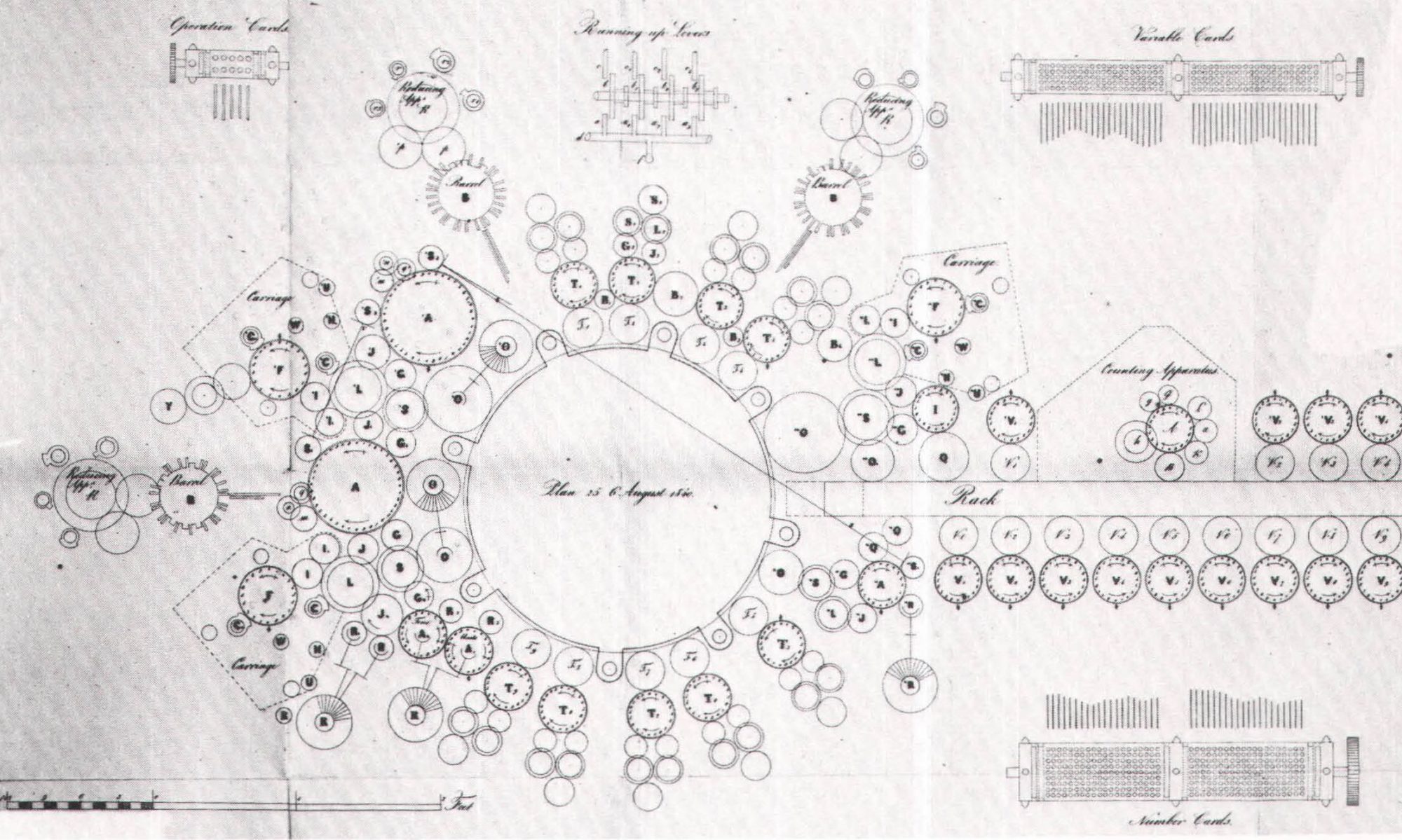
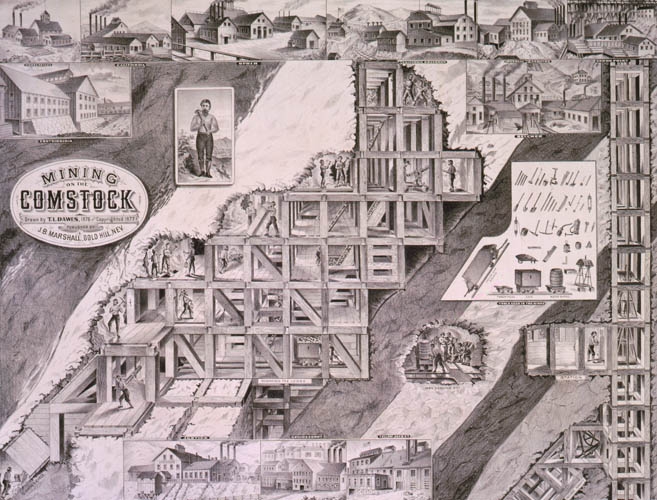
While digital humanities have alternately challenged and invigorated discussions surrounding technology in the past few years at the MLA conference, relatively fewer of these discussions have focused on the implications of media objects for literary history. Media archaeology is a loose constellation of different historical approaches to media, characterized by the synthesis of Foucauldian archeology and media-specific analysis by Friedrich Kittler; the deep time work of Siegfried Zielinski; the examination of the postal system by Bernhard Siegert; the archival research of Wolfgang Ernst; and the viral/insect media of Jussi Parikka. As explained by Parikka in What is Media Archaeology?, these approaches see “media cultures as sedimented and layered, a fold of time and materiality where the past might be suddenly discovered anew, and the new technologies grow obsolete increasingly fast.” Yet, media archaeology is also self-consciously anachronistic. “New media might be here and slowly changing our user habits,” Parikka observes, “but old media never left us. They are continuously remediated, resurfacing, finding new uses, contexts, adaptations” (3). How do we uncover these obscured media histories? What are their implications for nineteenth-century literature, a period of massive technological and media change in which many of the assumptions about information technology emerged? How are media objects sites where memory and futurity are negotiated—technically as well as thematically?
These questions form the basis for our roundtable, which draws from the different periods and nationalities of the nineteenth century to create a transatlantic approach to literary history informed by the materialist concerns of media archaeology. As Richard Menke details in Telegraphic Realism (2008), we seek an understanding of literature that delineates “the deep ways in which new technologies, and the wider understandings that a culture could derive from them, register in literature’s ways of imagining and representing the real” (3-4). Yet we also recognize that technological change often occured in uneven and unseen ways. Along with Shannon Mattern, we insist that media objects are enfolded forms of material infrastructure in which we can “dig up the cables, pull out the wires, analyze the disks—and observe their layering and interconnection.” In consumer electronics, this kind of folding is often perceived in the threading of circuits onto a board or the jury-rigging of existing technologies into what Brian Larkin calls the “bowdlerized copies” found in places like Nigeria (20). The comparatively simpler media objects that are the focus of our study are also products of technological threading, jury-rigging, even path dependency in which different technologies are etched into the urban landscape in similar ways, like the “telephone lines [which] follow railway lines” (Varnelis 28). Indeed, we argue that media objects and literary works have analogous pathway dependencies that help to form their global development.
Panel in Brief
While we present a very different model of literary “deep-time” from the one formulated by scholars like Wai Chee Dimock, who analyzes the globalized continental drift of American literature, we take up her challenge to the idea that literature is “an effect, an epiphenomenon of the US, territorially predicated and territorially describable” (755). Pathway dependencies do not follow national or period borders; rather they are what Zielinski calls “spaces of action for constructed attempts to connect what is separated” which, when revealed, expose “great diversity, which either has been lost because of the genealogical way of looking at things or was ignored by this view” (7). We suggest that these spaces of action have often been ignored by traditional literary histories, and the form of our roundtable seeks to compensate for such “coverage” by limiting the contributions of individual participants and emphasizing the collaborative and spontaneous observations between them. As such, each presenter was asked to limit their titles to the objects they consider. They will present their findings for 5-7 minutes, leaving the remaining time for response to the other projects and collaborative reflection with the audience.
Crystal Lake, “Heads on Coins.” “Heads on Coins” examines nineteenth-century British numismatic specimens that commemorated the heads of famous individuals. I read these as indexes of cognition and character (in both its moral and literary senses), as well as archaeological objects that testified to technological developments in metallurgy and economic shifts in the circulation of money. I focus on material and virtual collection of coins, sketches for coin design, their industrial production, as well as their representation in literary, visual, and philosophical discourses.
Richard Menke, “Phonautograms.” In the 1850s, Édouard-Léon Scott de Martinville invented a machine he called the phonautograph (“sound-itself-writing”), a device that responded to sound by etching a wavy line on a blackened sheet of paper. The resulting phonautograms were a marvel of incunabular recorded sound; they took the ephemeral phenomenon of sound and froze it, objectified it, rendered it in a visual medium without resorting to human symbols. But they were created only to translate sound to the page so that it could be examined as a stable entity, without any idea of a post-Edison future in which machines would routinely record sounds and play them back.
Craig Carey, “Sewing Patterns.” The 1863 graded home sewing pattern invented by Ebenezer Butterick was a nineteenth-century software that was weaved and remediated into the literary fabric of Theodore Dreiser’s Sister Carrie. These patterns also appeared in the editorial intelligence that Dreiser scripted for “New Women,” as an editor of female fashion magazines owned and operated by the Butterick Publishing Company, the main distributor of Butterick’s patterns. During the process of composing his novel, rocking back and forth in his chair, Dreiser would even fold a handkerchief into pleats and patterns.
Blake Bronson-Bartlett, “Boxes.” I discuss the box that Henry David Thoreau made to store his journal volumes, which are housed at the Morgan Library and Museum in New York City. This box held a particularly important place in the composition of the calendars Thoreau started making in the last three years of his life. Boxes also appear in the fire-proof sales of Ralph Waldo Emerson and Walt Whitman’s trunk. I show how the materiality of the box appears in the lives and writings of these three authors.
Roger Whitson, “Circuits.” The circuitboard was not formally invented until 1903, when Albert Hanson described flat foil conductors laminated to an insulator. Yet the experiments which lead to the semiconducting components of the circuitboard can be traced back to Michael Faraday’s experiments with copper in 1833 and the electromagnetic laws governing the circuit to the discoveries of Hans Christian Ørsted in 1820. This presentation will unfold the palimpsest archaeology of circuits by examining them as assemblages of different material technologies.
Works Cited
Wai Chee Dimock. “Deep Time: American Literature and World History.” American Literary History. 13.4 (2001): 755-775. Print.
Brian Larkin. Signal and Noise: Media, Infrastructure, and Urban Culture in Nigeria. Durham: Duke UP, 2008. Print.
Shannon Mattern. “Deep Time of Media Infrastructure.” Words in Space. 24 March 2012. Web log post. 31 March 2014.
Richard Menke. Telegraphic Realism: Victorian Fiction and Other Information Systems. Stanford, CA: Stanford UP, 2008. Print.
Jussi Parikka. What Is Media Archaeology? Cambridge, UK: Polity, 2012. Print.
Kazys Varnelis. “The Centripetal City: Telecommunications, the Internet, and the Shaping of the Modern Urban Environment.” Cabinet 17 (Spring 2004/5): 27-8. Print.
Siegfried Zielinski. Deep Time of the Media: Toward an Archaeology of Hearing and Seeing by Technical Means. Cambridge, MA: MIT, 2006. Print.
Panelist Bios
Crystal B. Lake is an Assistant Professor in the Department of English Language and Literatures at Wright State University. Her research has appeared in ELH, Modern Philology, RES, and The Eighteenth Century: Theory and Interpretation, among other places. She has received fellowships from the Lewis Walpole Library, the Yale Center for British Art, and the Centre for the Study of Early English Women’s Writing at Chawton House. She is currently completing a monograph entitled Artifacts: 1660-1837.
Richard Menke is Associate Professor of English at the University of Georgia and the author of Telegraphic Realism: Victorian Fiction and Other Information Systems (Stanford UP, 2008). His essays on literature, science, and media have appeared in Critical Inquiry, ELH, PMLA, Victorian Studies, Modern Fiction Studies, The Henry James Review, English Language Notes, the Victorian Periodicals Review, and elsewhere. In 2014, he is serving as the executive committee chair of the MLA’s Victorian Division.
Craig Carey is an Assistant Professor of English at the University of Southern Mississippi. His teaching and research center on nineteenth-century American literature, print culture, and media history, with a focus on the materialities of writing, authorship, and stylistic inscription. His published scholarship includes recent articles in American Literature, American Literary Realism, and The Hemingway Review.
Blake Bronson-Bartlett earned his PhD in English from the University of Iowa in Spring 2014. His criticism, interviews and translations have appeared in The Believer, The Seneca Review, Best American Poetry, Lana Turner, and on The Walt Whitman Archive. He is the editor of the Nineteenth-Century Literature Criticism entry on Walt Whitman (Gale/Cengage, 2013). He is currently working on a book project titled “Whitman’s Inscriptions: Script and Circulation in the Nineteenth-Century American City.”
Roger Whitson is Assistant Professor of English at Washington State University. He is author (with Jason Whittaker) of William Blake and the Digital Humanities: Collaboration, Participation, and Social Media (Routledge 2012). He examines the implications of critically engaging in nineteenth-century literary scholarship in the wake of the digital humanities and has published numerous articles on DH, digital pedagogy, Blake, and Steampunk. He is currently working on a special issue of Romantic Circles devoted to “Blake and Pedagogy” and a monograph called Steampunk and Alternate History: The Nineteenth Century in an Age of Digital Humanities. You can follow him on twitter (@rogerwhitson) or get more information about his scholarship on his website (rogerwhitson.net).